DHL Global Forwarding and CMA CGM collaborate to decarbonise global container transport
DHL Global Forwarding and CMA CGM have taken a significant step toward decarbonising global container transport. The two companies have agreed to jointly use 8,990 metric tons of UCOME second-generation biofuel, enabling an estimated 25,000 metric tons of CO2e well-to-wake emission reduction for ocean freight transported under DHL’s GoGreen Plus service. This initiative empowers DHL customers to significantly reduce the carbon intensity of their international supply chains while accelerating the industry’s transition to alternative marine fuels, highlighted a CMA CGM communique.
“This collaboration marks another milestone in our mission towards low-carbon supply chains,” said Casper Ellerbaek, Head of Global Ocean Freight at DHL Global Forwarding. “By leveraging sustainable marine fuels, we help our customers achieve their climate goals and drive real progress toward decarbonisation.”
Driving lower-carbon ocean freight solutions
Through DHL’s GoGreen Plus and CMA CGM’s ACT+ low-carbon transport offering, shippers can integrate sustainable maritime transport into their logistics operations. CMA CGM will physically bunker the biofuel across its fleet, ensuring that emission reductions correspond to DHL’s Book & Claim approach. DHL’s GoGreen Plus service enables customers to cut well-to-wake emissions by selecting sustainable marine fuel options for their transport, allowing reductions of up to 80% GHG emissions compared to conventional maritime fuel.
Shared ambition for Net Zero
While DHL aims to reach net-zero GHG emissions by 2050, Olivier Nivoix, Executive Vice President Shipping, CMA CGM Group, confirmed: “Our partnership with DHL demonstrates how collaboration can accelerate the shift to low-carbon shipping. ACT+ offers reliable and scalable solutions backed by our fleet designed for alternative fuels. CMA CGM, committed to Net Zero Carbon by 2050, has already cut the carbon intensity of its shipping activities by 57% since 2008 and is investing heavily in alternative fuels and dual-fuel vessels.”
Both companies will continue to explore opportunities to scale up lower-carbon fuel usage and develop collaborative approaches to decarbonise international supply chains.
What is ACT+?
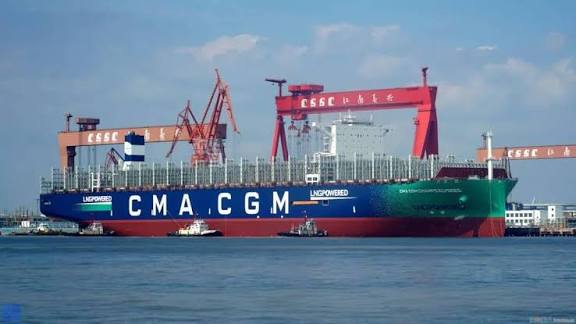
The CMA CGM Group has been investing for many years in the decarbonisation of its activities. As a pioneer in the use of biofuels and in the deployment of LNG-powered vessels, CMA CGM continuously optimises its operations, diversifies its energy mix and supports innovation, with the objective of achieving Net Zero Carbon by 2050.
In response to growing customer expectations regarding the environmental performance of their supply chains, CMA CGM has developed ACT+, its range of low-carbon transport solutions.
ACT+ enables customers to reduce the carbon footprint of their shipments by 10%, 25%, 50% or up to 83%, on a well-to-wake basis, through the use of low-carbon fuels such as second-generation biofuels, and to complement these reductions through carbon offsetting solutions.
What is GoGreen Plus?
DHL’s Go Green Plus products provide decarbonised solutions across DHL’s core offerings by leveraging sustainable fuels and low carbon technology. Go Green Plus products are based on true value chain decarbonisation. This is enabled by the ‘book & claim’ approach. Book & claim enables DHL to directly replace fossil fuels with sustainable fuels within the logistics company’s network and allocate environmental benefits to paying customers, even when their shipments are not physically transported with the assets using these fuels. GoGreen Plus allows DHL’s customers to reduce their indirect Scope 3 emissions in their value chain arising from upstream and downstream transportation and distribution. It also helps customers with voluntary reporting of greenhouse gas (GHG) emissions and progress against their decarbonisation targets, the communique added.